Fed Rate Hike Odds September 2026: Polymarket vs Kalshi
For most of the past two years the only live question about Fed rate hike odds was whether the number would round to zero. That is over. As I write this on September 4, 2026, Polymarket prices a 25 basis point increase at the September 16 FOMC meeting at 51.5%, and Kalshi has the same outcome at 54%. A hike is now the single most likely outcome of the next Fed meeting, and the market is close to a coin flip on it.
That matters well beyond trading screens. The federal funds target range has sat at 3.50-3.75% since late 2025, and every mortgage reset, credit line and corporate refinancing has been priced off an assumption that the next move was down. If the Fed moves up on September 16, a lot of that positioning is wrong.
I pulled every number in this article directly from the venues and the primary sources this morning: live Polymarket Gamma and CLOB prices, live Kalshi market data, the BLS employment release published at 8:30am ET today, and the Fed's own July minutes and Jackson Hole text. Where two sources disagree, I say so rather than picking the tidier number.
Below is where the odds sit, the three events that got them here, why Polymarket, Kalshi and CME FedWatch do not agree, and the specific data still to land before the decision. If you want the constantly updating version rather than this snapshot, that lives on our Fed decision odds page.
Where September's Rate Hike Odds Stand Right Now
The cleanest read comes from putting both venues side by side on the same five outcomes. Polymarket's September Fed decision event has traded roughly $93.6 million in volume, so this is not a thin market being pushed around by one trader. Kalshi's equivalent series is smaller but still deep, with about $13.7 million on the no-change contract alone.
| Outcome on September 16 | Polymarket | Kalshi | Implied read |
|---|---|---|---|
| Hike 25 bp (to 3.75-4.00%) | 51.5% | 54% | Modal outcome on both venues |
| No change (hold at 3.50-3.75%) | 47.5% | 47% | Effectively a coin flip against a hike |
| Hike more than 25 bp | 0.75% | 2% | Priced as a tail, not a scenario |
| Cut 25 bp | 0.65% | 1% | Fully priced out |
| Cut more than 25 bp | 0.15% | 1% | Fully priced out |
Live prices captured September 4, 2026, 16:08 UTC. Polymarket via Gamma API (event 'Fed Decision in September?'); Kalshi via last trade on the KXFEDDECISION-26SEP series. Kalshi's column sums above 100% because those are last-trade prices across separate contracts, not a single normalised book.
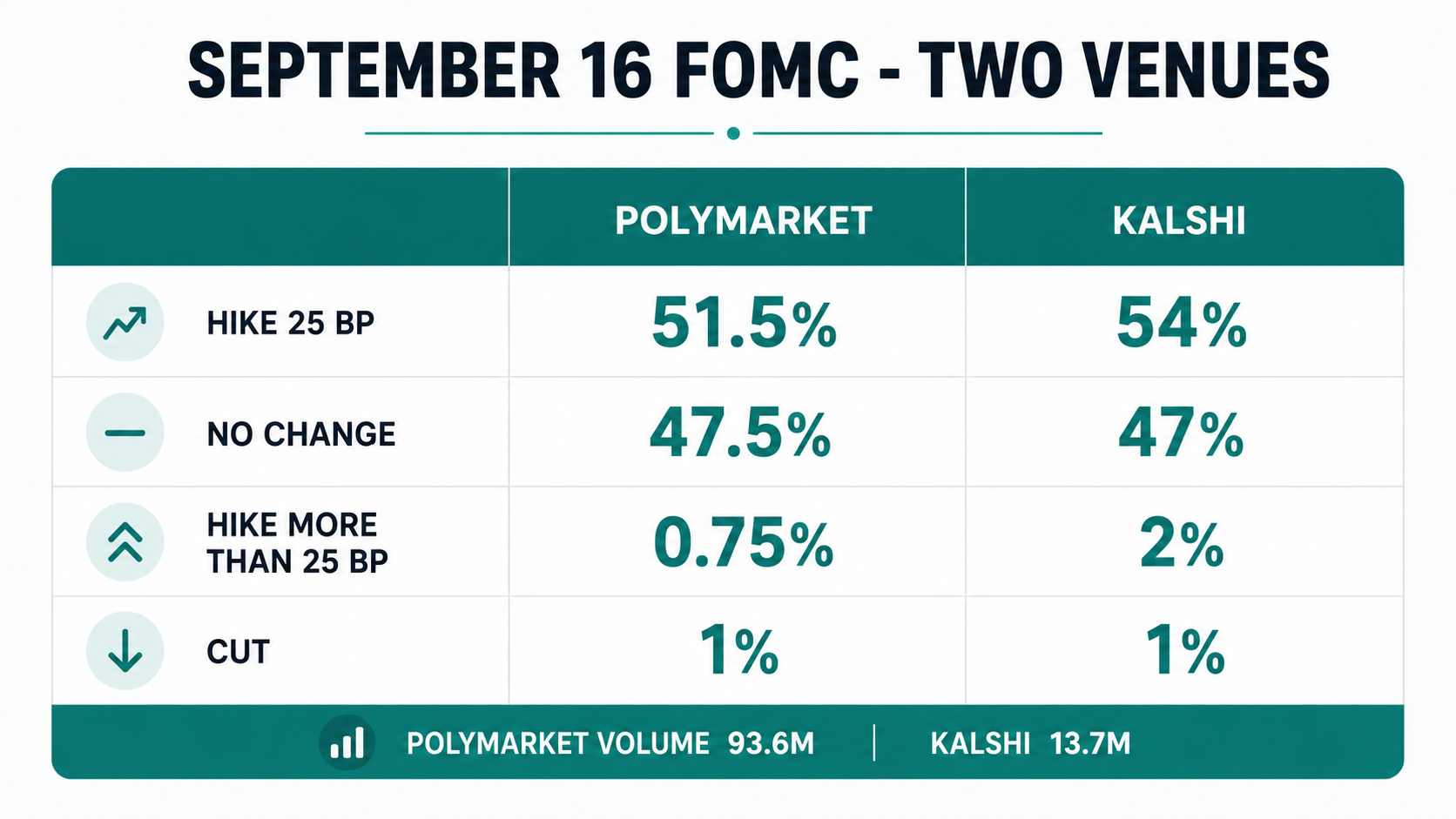
Two things stand out. First, the cut is gone. Combined, all cut outcomes price under 1% on Polymarket and about 2% on Kalshi. Anyone still holding a September cut thesis is arguing against a market that has stopped pricing the possibility at all.
Second, the hike is priced as a hike of exactly 25 bp or nothing. A larger move sits at 0.75% to 2%, which tells you traders read this committee as willing to move but not willing to shock. That is consistent with a Fed that has spent the year insisting it is data dependent rather than on a path.
Why a Rate Hike Is Even on the Table in 2026
The short version is that inflation stopped cooperating, and the reason it stopped cooperating is energy. Core inflation is not the problem here. The July CPI report put core at 2.5% year over year, which is close enough to target that on its own it would argue for patience or easing.
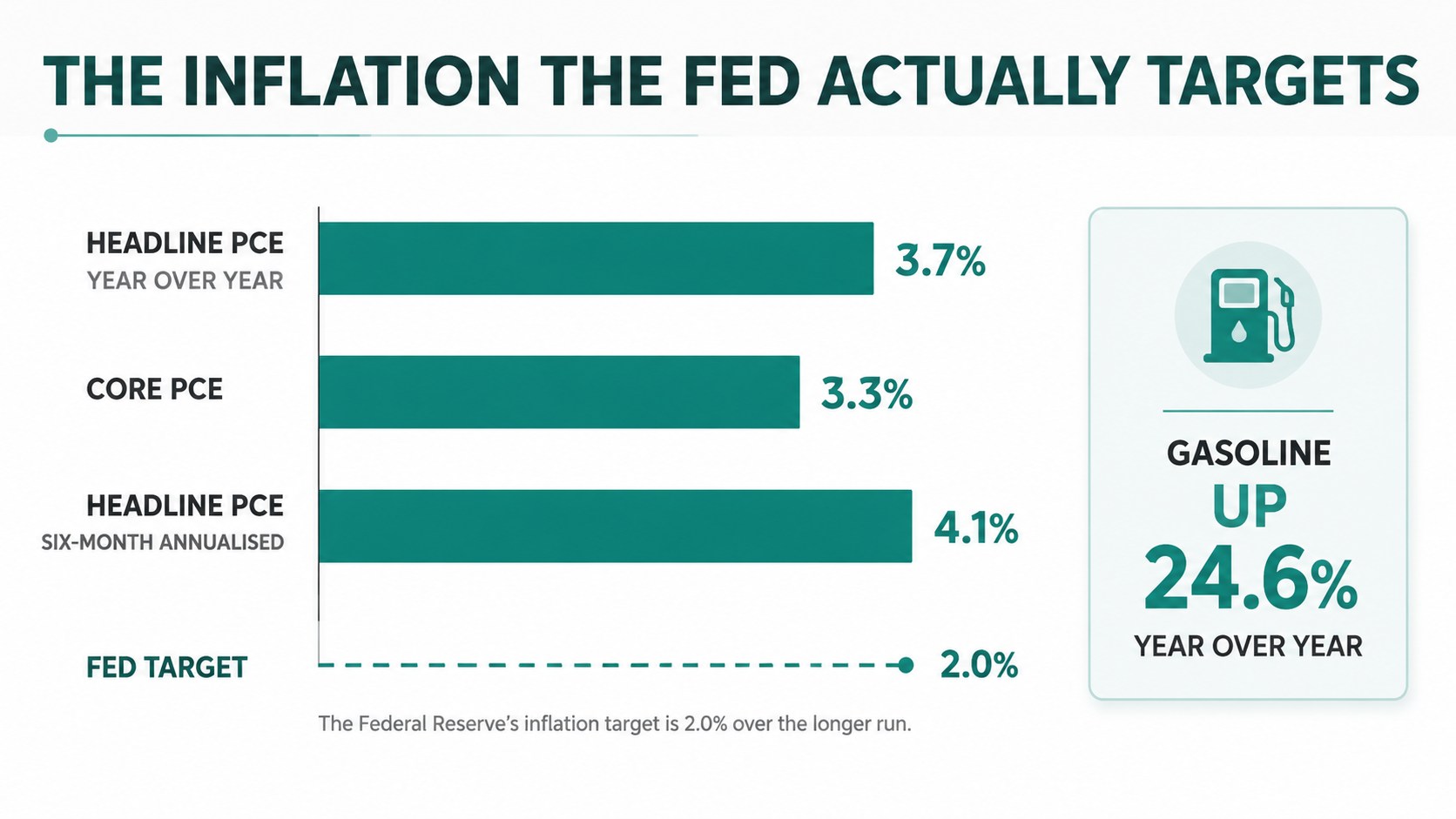
Headline is another story. The same report showed all-items CPI at 3.4% year over year, with the energy index up 14.7% and gasoline alone up 24.6% against a year earlier. That gap between 2.5% core and 3.4% headline is almost entirely an energy shock working through the economy.
| Gauge | Latest reading | Period | Fed target |
|---|---|---|---|
| Headline CPI (year over year) | 3.4% | July 2026 | n/a |
| Core CPI (year over year) | 2.5% | July 2026 | n/a |
| Headline PCE (year over year) | 3.7% | July 2026 | 2% |
| Headline PCE (6-month annualized) | 4.1% | Feb-Jul 2026 | 2% |
| Core PCE (year over year) | 3.3% | July 2026 | 2% |
| Unemployment rate | 4.1% | August 2026 | n/a |
| Average hourly earnings (year over year) | 3.1% | August 2026 | n/a |
CPI from the BLS release of August 12, 2026; PCE figures computed from the FRED series PCEPI and PCEPILFE (July data, published August 26); labour data from the BLS Employment Situation released September 4, 2026.
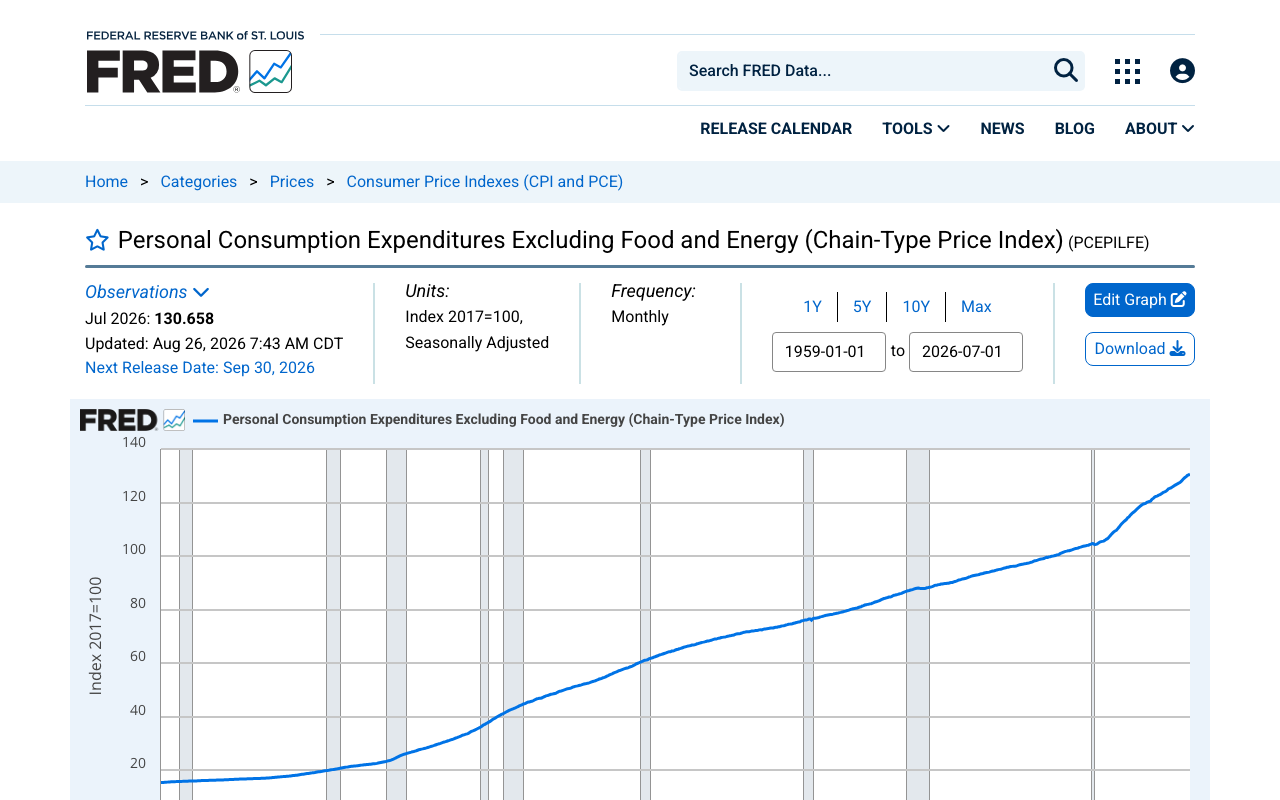
The PCE numbers are the ones that actually bind, because the Fed's 2% target is defined on PCE rather than CPI. I recomputed both from the raw FRED series rather than taking them from a headline, and they land at 3.7% year over year for headline and 3.34% for core. The six-month annualized headline figure of 4.1% is the uncomfortable one, because it says the recent trend is worse than the annual number, not better.
A central bank can look through an energy shock when inflation expectations are anchored and the labour market is loosening. It is much harder to look through one when unemployment is steady at 4.1% and payrolls are beating expectations by 100,000. That is the box the FOMC walked into this morning. If you want the mechanics of how CPI and PCE diverge, we covered that in detail in CPI vs PCE.
The July Meeting: A 9-3 Vote and Three Hawkish Dissents
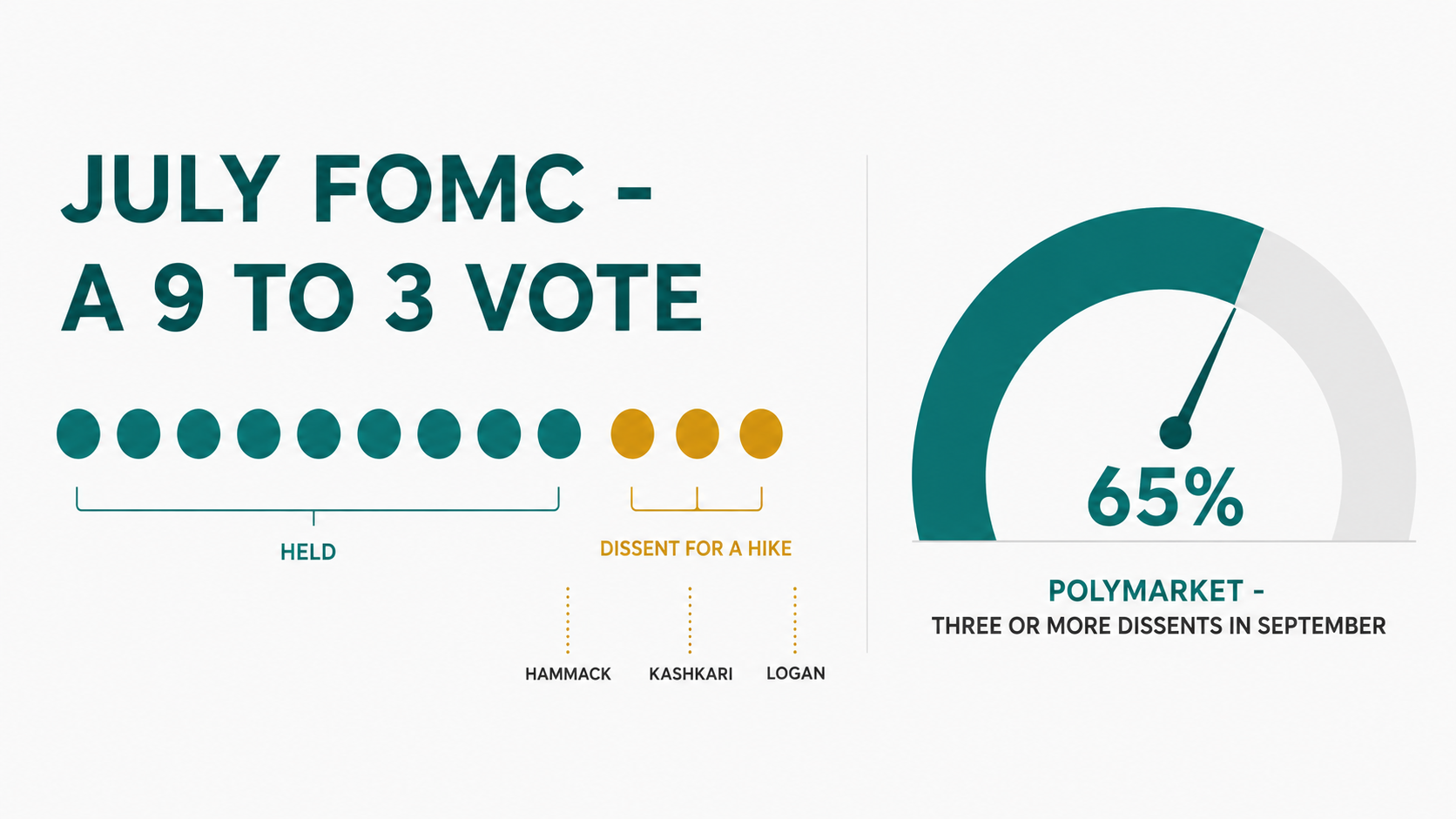
On July 29 the FOMC held the target range at 3.50-3.75% by a vote of 9-3. What made it remarkable was the direction of the dissents. Cleveland's Beth Hammack, Minneapolis' Neel Kashkari and Dallas' Lorie Logan all wanted a 25 bp increase.
Three simultaneous dissents in favour of tightening is not a normal committee outcome. Chair Kevin Warsh described it publicly as a "good family fight," which is a generous way of saying the committee no longer agrees on the direction of the next move, never mind its timing.
The minutes from that meeting, released on August 19, went further. Officials recorded that a rate increase would likely become necessary if inflation did not cool. That is close to a conditional commitment, and it is the reason the September meeting is being traded as a genuine decision rather than a formality.
Polymarket runs a market on how many officials dissent in September. It is thin, with only about $13,000 of volume, so I would not lean on it hard. For what it is worth, it prices three dissents at 38% and four or more at 27%, with a unanimous decision at just 7.5%. The market expects another split committee whichever way the vote lands.
Jackson Hole: The Speech That Repriced September
On August 28, Warsh gave the keynote at the Jackson Hole symposium, titled "In Our Time." Markets had expected a balanced assessment. They got something considerably more hawkish, and the repricing was immediate and large.
The Fed's price-stability objective of 2 percent, as measured by the personal consumption expenditures (PCE) price index, is a firm, fixed target.
Kevin Warsh, Jackson Hole Economic Policy Symposium, August 28, 2026
He also said that inflation running above target means "the Fed's predominant focus right now should be on prices," and described credit and loan markets as showing "few signs of policy restraint." That last point is the important one for traders. In July he had called financial conditions uneven. Calling them effectively unrestrictive in August is the language a central banker uses shortly before tightening.
The price reaction on Polymarket was one of the largest single-day moves of the cycle. Here is the hike probability tracked across the past month, which reads as a clean narrative of three data events.
| Date (2026) | Polymarket hike probability | What happened |
|---|---|---|
| August 5 | 48.5% | Pre-jobs-report baseline |
| August 8 | 36.5% | July payrolls printed -23,000 against about +85,000 expected |
| August 15-17 | 24.5% | Cycle trough; hike largely priced out |
| August 28 | 30.5% | Morning of the Jackson Hole keynote |
| August 29 | 49.5% | Day after Warsh's speech, a 19 point jump |
| September 2 | 58.5% | Cycle peak |
| September 4 (00:00 UTC) | 42.5% | Drifted lower ahead of the jobs report |
| September 4 (16:08 UTC) | 52.5% | After the August payrolls beat |
Daily closes from the Polymarket CLOB price history for the '25 bps increase' contract, interval=1m, fidelity=1440. Captured September 4, 2026.
Note what the August 8 line does to the popular story that prediction markets simply follow the Fed. The July jobs report knocked 12 points off the hike probability in a day, and the mid-August trough of 24.5% reflected a market that had largely stopped believing in a September move. It took a speech to reverse that, and then a data print to confirm it.
How This Morning's Jobs Report Moved the Odds
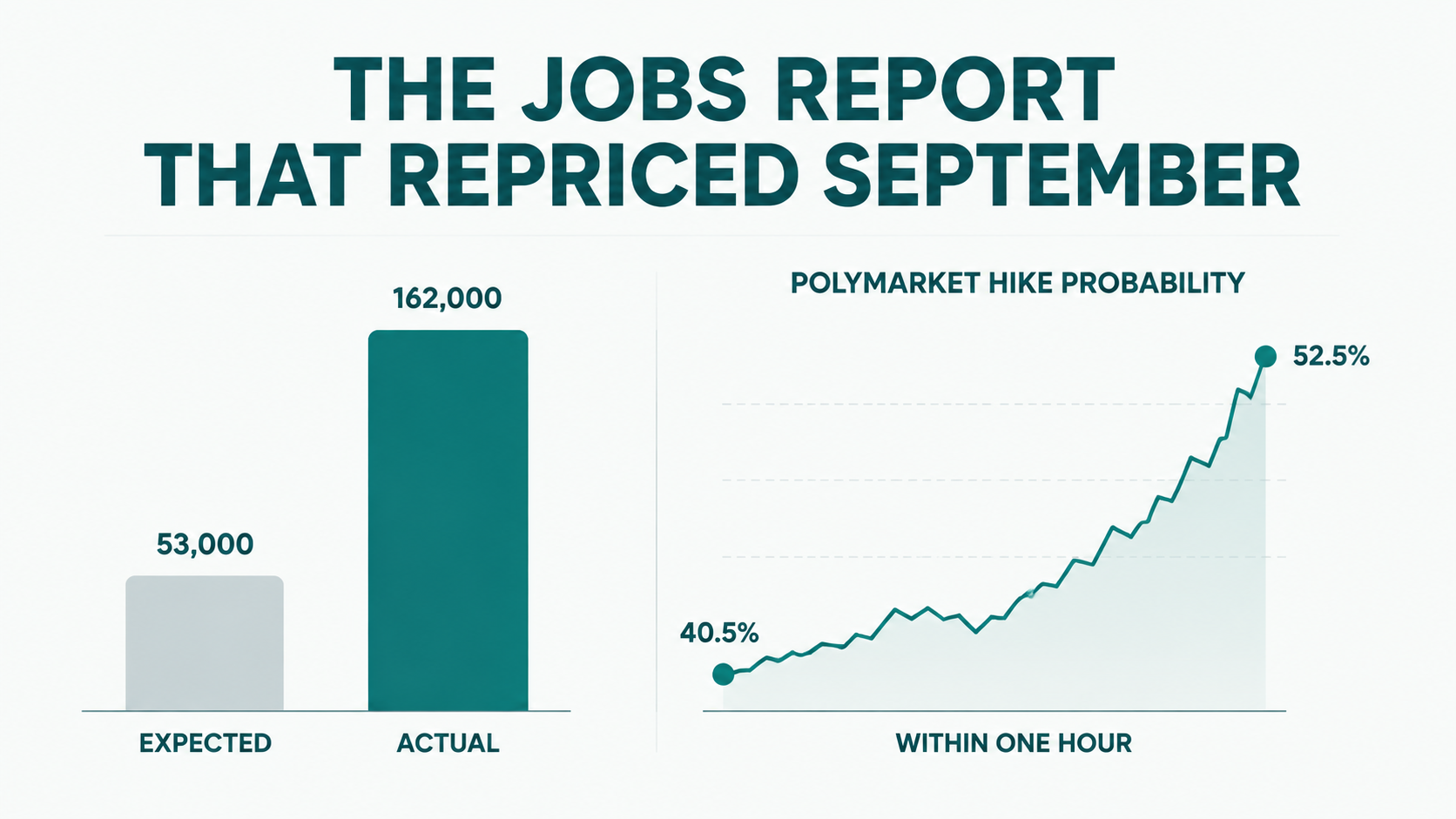
The August Employment Situation landed at 8:30am ET today, which is 12:30 UTC. Nonfarm payrolls rose 162,000 against a consensus near 53,000, the strongest month in five. The unemployment rate held at 4.1%, exactly as expected.
The revisions arguably mattered more than the headline. June was revised up 11,000 to +31,000, and July was revised up 44,000, from -23,000 to +21,000. The weak July print that crushed hike odds back on August 8 has been revised into a positive month. The data that made the doves' case has been substantially withdrawn.
| Time (UTC) | Polymarket hike probability |
|---|---|
| 11:00 | 41.5% |
| 12:00 | 40.5% |
| 12:30 | Jobs report released |
| 13:00 | 52.5% |
| 14:00 | 50.5% |
| 15:00 | 51.5% |
| 16:00 | 51.5% |
Hourly Polymarket prices for the '25 bps increase' contract on September 4, 2026 (interval=1d, fidelity=60). The move from 40.5% to 52.5% spans the release.
A 12 point repricing inside one hour is a large move for a market with this much depth behind it. It also holds: three hours later the contract is still sitting near 51.5% rather than retracing, which suggests the move was a genuine reassessment rather than a liquidity spike.
One caveat worth holding onto. Average hourly earnings rose 3.1% year over year, which is not a wage-inflation signal, and labour force participation at 61.6% is down half a point since January. A committee that wanted a reason to wait could point at both. Our macro release calendar tracks each of these prints as they land.
Polymarket, Kalshi and CME FedWatch Do Not Agree
Polymarket says 51.5%. Kalshi says 54%. CME FedWatch, derived from fed funds futures rather than event contracts, was reading around 66% on August 31 according to reporting at the time. That is a wide spread for what looks like the same question, and the gap is mostly structural rather than a disagreement about the Fed.
- They are not measured at the same moment. The FedWatch figure above is from August 31, near the Polymarket cycle peak of 58.5%. Comparing it to a September 4 print overstates the disagreement. Always date-stamp these numbers before comparing them.
- FedWatch is derived, not traded. It infers probabilities from fed funds futures pricing, which also embeds risk premia and hedging demand. A prediction market contract is a direct bet on the outcome.
- Last trade is not mid-market. Kalshi's 54% is a last-trade price; its bid/ask sat at 53/54. Quoting last trades across several contracts is why the Kalshi column in the first table sums above 100%.
- Fees and capital costs differ. Traders will not arbitrage a two point gap between venues if the round trip costs more than two points, so small spreads persist without either venue being wrong.
My working rule is to treat anything inside about five points as noise between venues and to only get interested when the gap is persistent and larger than that. On the September contract, Polymarket and Kalshi are two and a half points apart, which is well inside normal. We set out how we handle these comparisons on the methodology page.
What Could Still Change the September Decision
There is one major data event between now and the decision, and it is the right one to watch. August CPI publishes on September 11, five days before the FOMC announcement. Given that the hike case rests on inflation rather than growth, this print carries more weight for the decision than the jobs report did.
| Date (2026) | Event | Why it matters for September 16 |
|---|---|---|
| September 11 | August CPI release | Last major inflation print before the decision. A core reading above 2.5% strengthens the hike case considerably. |
| September 15-16 | FOMC meeting | Decision at 2:00pm ET on the 16th, press conference at 2:30pm ET. |
| September 16 | Summary of Economic Projections | September is a dot plot meeting. The projections may matter more for markets than the rate decision itself. |
| October 27-28 | Next FOMC meeting | No SEP. Polymarket prices a hike by this meeting at 61.5%; Kalshi prices a hike at this meeting at 28%. |
| December 8-9 | Final 2026 FOMC meeting | Dot plot meeting. Last chance to move rates in 2026. |
FOMC dates and SEP designations from the Federal Reserve's published 2026 calendar. CPI release date from the BLS schedule.
The dot plot is the part most people underrate. September is one of four meetings a year that carries a Summary of Economic Projections, and a committee that holds rates while shifting its dots upward has effectively tightened without moving. It is entirely possible for the hold contracts to pay out while the meeting reads as hawkish.
The other live variable is political. Warsh's position puts him at odds with an administration that has been vocal about wanting lower rates, and reporting after Jackson Hole framed the speech as raising the stakes on Fed independence. That is not something a prediction market prices cleanly, but it is a real part of the September backdrop. Our full meeting page for September 2026 tracks the odds as the date approaches.
How to Read These Odds Without Getting Burned
A contract trading at 0.515 implies a 51.5% probability, minus fees and the cost of tying up capital until resolution. That last part gets skipped constantly. On a contract resolving in twelve days that drag is small, but on the October and December contracts it is not, which is one reason longer-dated markets look mispriced when they are not.
The buckets in the first table are mutually exclusive and, on Kalshi, explicitly so in the rules: if the Fed hikes 50 bp, the 50 bp market resolves yes and the 25 bp market resolves no. Reading "hike 25 bp at 54%" as "54% chance of any hike" understates the total hike probability, which is nearer 56% once the larger-move contract is included.
And as covered above, be careful with cumulative versus per-meeting framing. "Hike by October" at 61.5% and "hike at the October meeting" at 28% are both correct and describe different events. If you back out the implied conditional, Polymarket is saying there is roughly a one in five chance of an October hike given no September hike.
If you want the background on how these contracts settle and where the practical traps are, how to bet on Fed rate cuts covers the mechanics, and the same structure applies in reverse for hikes. For the longer arc of this cycle, when will the Fed cut rates is where we tracked the easing case before it inverted.
My own read, for whatever a read is worth against a market this liquid: the revisions in this morning's report did more damage to the case for waiting than the headline number did. But September 11 still gets a vote, and a soft core CPI print would put this back to a genuine toss-up. I would not treat 51.5% as anything other than what it says, which is that nobody knows.
Frequently asked questions
Will the Fed raise interest rates in September 2026?
As of September 4, 2026, Polymarket prices a 25 basis point hike at the September 16 meeting at 51.5% and Kalshi at 54%. That makes a hike the single most likely outcome, but it is close to a coin flip against no change at roughly 47%. The August CPI release on September 11 is the last major data point before the decision.
What is the current federal funds rate?
The federal funds target range is 3.50-3.75%, unchanged since late 2025. The effective federal funds rate was 3.63% on September 3, 2026 according to FRED. A 25 basis point hike on September 16 would move the target range to 3.75-4.00%.
Why would the Fed hike rates when core inflation is only 2.5%?
Because the Fed targets PCE, not CPI, and headline PCE is running at 3.7% year over year with a six-month annualized rate of 4.1%. Core PCE is at 3.3%, not 2.5%. The 2.5% figure is core CPI, a different gauge. An energy shock, with gasoline up 24.6% year over year, is driving headline inflation well above target while the labour market stays firm at 4.1% unemployment.
How did the August jobs report affect Fed rate hike odds?
It raised them sharply. Payrolls rose 162,000 against a consensus near 53,000, and July was revised up from -23,000 to +21,000. Polymarket's hike probability moved from 40.5% just before the 8:30am ET release to 52.5% within the hour, and it held near that level through the afternoon.
Why do Polymarket, Kalshi and CME FedWatch show different probabilities?
Partly timing and partly structure. FedWatch derives probabilities from fed funds futures, which embed risk premia and hedging demand, while Polymarket and Kalshi are direct bets on the outcome. Quoted figures are also captured at different moments, and Kalshi's headline numbers are last trades rather than mid-market. Gaps of a few points between venues are normal and not usually an arbitrage.
What is the difference between 'hike by October' and 'hike at the October meeting'?
The first is cumulative and covers a hike at either the September or October meeting. The second covers only a move at the October meeting itself. That is why Polymarket's 'hike by October meeting' price of 61.5% sits well above Kalshi's 28% for an October hike. Both are correct; they answer different questions.
When is the next FOMC meeting after September 2026?
The FOMC meets October 27-28, 2026, then December 8-9, 2026. The October meeting carries no Summary of Economic Projections. September and December are both dot plot meetings, which historically makes them more market moving.
How many Fed officials are expected to dissent in September?
Three officials dissented in July, all in favour of a hike: Beth Hammack, Neel Kashkari and Lorie Logan. Polymarket runs a market on the September dissent count, which prices three dissents at 38% and four or more at 27%, with a unanimous vote at just 7.5%. That market is thin, with about $13,000 in volume, so treat it as indicative only.